
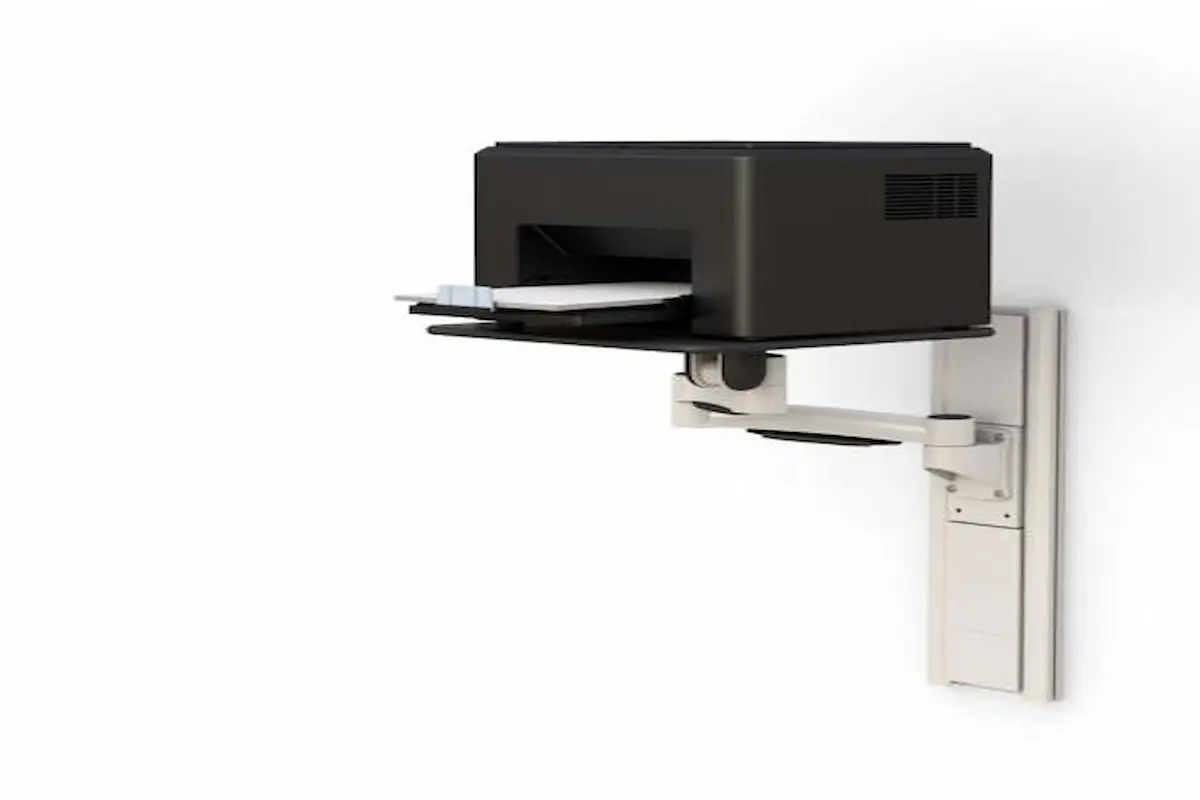
A wall mount swing arm shelf can create a practical equipment surface without permanently occupying valuable floor or desk space. For buyers comparing wall-mounted equipment solutions, choosing the right configuration requires more than finding a shelf that appears large enough for a device.
Consider the equipment’s weight, shelf dimensions, arm reach, movement range, and wall structure. A poor match may restrict access or overload the mounting surface.
This guide explains how these shelves work, where they fit, and which specifications matter. It helps facility managers, planners, IT teams, and commercial buyers compare options confidently.
What Is a Wall Mount Swing Arm Shelf?
A wall mount swing arm shelf is an equipment platform attached to an articulated arm or pivoting wall bracket.
Instead of remaining in one fixed position, the shelf can move away from the wall, rotate sideways, or return to a compact storage position.
Movement varies by model. Basic products rotate horizontally, while advanced systems may add several pivots, height adjustment, tilt, or locking positions.
A swing-arm shelf can support items such as:
• Laptops and compact computers
• Keyboards and control devices
• Small printers or scanners
• Medical equipment
• Testing instruments
• AV and communication components
• Documentation and work materials
Unlike a fixed shelf, it brings equipment closer when needed. A folding wall shelf usually moves vertically rather than extending and rotating on an articulated arm.
How Swing-Arm Shelf Mechanisms Work
Most swing-arm shelves use connected joints between the wall plate and equipment platform. These joints allow the shelf to extend, retract, and rotate within a defined working area.
Single-Arm Mechanisms
A single-arm mechanism has one main extension section and one or two pivots. It suits short movements between the wall and a nearby working position.
Its simple movement also suits narrow rooms and areas with limited clearance.
Multi-Joint Articulating Arms
An articulating wall shelf uses movement principles similar to adjustable monitor arms. Multiple connected sections give users greater control over the shelf’s distance and horizontal position.
However, every additional joint affects the shelf’s movement path. Before purchasing, confirm that the arm will not collide with doors, monitors, cabinets, wall fixtures, or nearby workstations.
Tension and Position Control
Systems may use tension controls, friction joints, handles, locks, or fixed stops.
A load change may require a tension or friction adjustment under the manufacturer’s instructions.
The shelf should move smoothly, stay stable, and hold its selected position.
Where Wall-Mounted Swing-Arm Shelves Are Used
Wall-mounted swing-arm shelves work best in environments where users need occasional access to equipment but cannot dedicate permanent floor or desk space to it.
Control Rooms and Operations Centers
In control rooms, a swing-arm shelf can support a laptop, keyboard, communication device, or secondary control surface. Users can bring the equipment closer during a task and move it away when it is no longer required.
Healthcare Environments
Clinics, laboratories, and treatment areas may use these shelves for computers, diagnostic devices, or documentation. Retracting the shelf can free access around the work area.
Healthcare buyers should also review materials, exposed joints, cable routing, and cleaning compatibility.
Manufacturing and Technical Workspaces
An adjustable wall mounted shelf can provide access to inspection devices, terminals, scanners, tools, and testing equipment. Facilities that need to reposition equipment across a longer work area may also benefit from track mounting systems. A track can provide greater horizontal positioning flexibility than a single fixed mounting point.
Security and Monitoring Areas
Security teams may use one for secondary computers, access-control devices, radios, or reporting equipment, then retract it after use.
Education, Retail, and Service Areas
Training rooms, check-in stations, retail counters, and service desks can use movable shelves to create temporary workspace while preserving floor space.
Key Dimensions and Specifications to Compare
Buyers often focus on shelf width and depth, but arm movement and the complete installed footprint matter just as much.
Shelf Width and Depth
Measure the full equipment footprint, including feet, connectors, handles, and accessories. The device should rest securely within the shelf.
Allow room for ventilation, cables, and controls. For a laptop, verify the shelf fits both open and closed positions.
Maximum Extension
Maximum extension shows how far the shelf can move from the wall. More extension can improve access, but it also creates a wider movement path.
Match maximum reach to the intended working position. Excess extension may require more clearance and create unnecessary movement.
Folded or Retracted Depth
Check the stored projection, especially in corridors, compact rooms, and areas with passing traffic.
A shallow retracted depth may be more valuable than maximum extension when the shelf must remain unobtrusive between uses.
Rotation and Movement Range
Review how far each joint rotates and whether the shelf can approach the wall from either side. Also confirm whether the platform stays level while moving.
Use removable tape on the floor or wall to map the expected movement before installation. This simple step can reveal conflicts with furniture, displays, doors, and electrical outlets.
How to Determine the Required Weight Capacity
Begin by calculating the total supported load. Do not consider only the main device.
• The equipment itself
• Power supplies and docking stations
• Keyboards, accessories, or peripherals
• Cables resting on the shelf
• Brackets, trays, or adapters
• Materials users may temporarily place on the surface
Compare this combined weight with the manufacturer’s rated capacity. All attached components must remain within the published load limit.
Choose capacity above the current load to allow for accessories. That margin does not replace proper installation or increase the manufacturer’s rating.
The center of gravity also matters. A deep device placed near the front of the shelf creates more leverage than a compact device positioned close to the arm.
When a desktop computer accompanies the shelf-mounted equipment, compatible CPU holders can move the computer off the shelf or floor. This configuration can improve organization while keeping the shelf available for active devices and controls.
Confirm approval for the equipment’s type, depth, weight, and orientation.
Wall Construction and Mounting Considerations
A wall mount swing arm shelf transfers both equipment weight and movement forces into the wall. Therefore, the mounting surface is just as important as the shelf mechanism.
Before buying, compare compatible wall-mounted systems and review their approved wall types, fastener requirements, mounting patterns, and structural limitations.
Wood Stud Walls
Many wall-mounted systems can attach directly to suitable wood framing. The bracket must align with the required stud position, spacing, and fastener pattern shown in the installation instructions.
Do not assume that drywall alone can support an articulating shelf.
Metal Stud Walls
Metal studs may require reinforcement, a dedicated mounting kit, or added structural support. Wood or concrete fasteners may be unsuitable.
Use only hardware approved for the wall structure and expected load.
Concrete and Masonry Walls
Concrete, brick, and concrete masonry units require anchors selected for the exact base material and supported weight.
Anchor requirements vary by wall condition, bracket design, load, and environment. Ask a qualified installer when the correct method is uncertain.
Existing Wall Conditions
Before installation, check for concealed electrical wiring, plumbing, communications cables, wall damage, and unsuitable surface coverings.
Seek professional review when the wall is uncertain, the equipment is heavy, or the shelf will move frequently.
How to Choose the Right Shelf for Your Equipment
The best shelf fits the equipment, user, wall, and workflow—not simply the longest reach or highest rating.
- Document the equipment. Record dimensions, weight, cable locations, ventilation needs, and operating position. Note whether users must open covers, replace supplies, or reach controls on the shelf.
- Define the working position. Set the working position based on reach, viewing angle, posture, and nearby tools. Occasional laptop use differs from a frequently operated control panel.
- Map the movement area. Measure the wall-to-work distance and required side movement. Mark the arm path and confirm it stays clear throughout its range.
- Compare adjustment features. Choose only necessary features, such as rotation, reach, height adjustment, tilt, locks, cable management, or an equipment retainer.
- Review accessories and equipment support. Review compatible mounting accessories such as keyboard trays, adapters, cable-management components, and retainers. Keep every accessory within the system’s total rated capacity.
- Confirm installation requirements. Verify wall compatibility, anchors, fasteners, stud spacing, tools, and clearances before ordering. Follow the manufacturer’s approved wall and hardware requirements.
- Consider long-term use. Consider future equipment changes, replacement parts, and adjustment needs. Cables must support full extension without pinching, stretching, or disconnecting.
Plan the Shelf Around the Complete Application
Choosing a wall mount swing arm shelf requires a complete review of the equipment, movement range, wall construction, and user workflow.
Start with accurate dimensions and total weight. Then map the required reach and movement path. Finally, confirm that the wall, hardware, and accessories support the complete system.
A well-planned shelf improves access without creating an obstruction. Before ordering, compare drawings, instructions, load ratings, wall requirements, and accessory compatibility.
For help choosing a suitable system for a commercial, healthcare, industrial, or control-room application, contact a mounting specialist to discuss your equipment, workspace, and installation requirements.
Frequently Asked Questions
What is a wall mount swing arm shelf used for?
It supports laptops, keyboards, controls, medical devices, and other equipment while allowing the platform to extend, rotate, and retract toward the wall.
How much weight can a swing-arm shelf hold?
Capacity varies by product. Calculate the combined weight of the equipment, accessories, adapters, and cables, then follow the manufacturer’s published limit.
Can a swing-arm shelf be installed on drywall?
Drywall alone may not provide adequate support. The mounting bracket normally requires suitable studs, reinforcement, masonry, or manufacturer-approved anchors.
What is the difference between a swing-arm shelf and a folding wall shelf?
A swing-arm shelf extends and rotates horizontally. A folding wall shelf usually raises or lowers vertically while remaining attached to a fixed wall bracket.
How do I choose the correct shelf size?
Measure the equipment’s complete footprint and allow room for connectors, ventilation, controls, and cables. The device should rest securely within the platform.